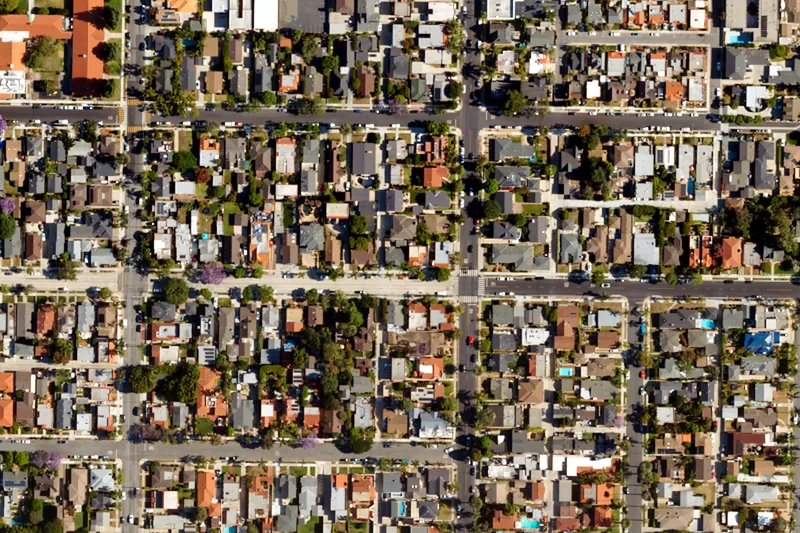
Most homes in Los Angeles have one of a few roof types. Sloped roofs often use asphalt shingles, concrete or clay tile, or metal. Flat or nearly flat roofs use membranes or coatings. This hub explains how to tell them apart and which ratings matter when you compare products.
This site does not sell, install or recommend any product. We name products only because their makers publish data sheets you can check yourself.
Steep-slope and low-slope roofs
California's energy code splits roofs into two groups by pitch. A low-sloped roof has a rise of less than 2 inches per 12 inches of run (2:12). A steep-sloped roof is 2:12 or steeper. The rules for cool roofs are different for each group, so it helps to know which one you have. Source: California Energy Commission.
The main materials
Asphalt shingles. The 2025 Cost vs. Value report uses asphalt shingles for its standard reroof model job. Major brands publish data sheets that list the fire class, wind test class and how many bundles cover a "square." A square is 100 square feet of roof. For example, GAF lists 3 bundles and 64 pieces per square for its Timberline HDZ shingle.
Concrete tile. Tile is much heavier than shingles. Eagle Roofing Products lists about 550 to 970 pounds per 100 square feet for its field tile, depending on the profile and whether it is a standard or lightweight tile. Weight matters because the roof framing has to carry it.
Clay tile. Clay tile is common on Spanish style homes. We did not find a clay tile data sheet we could verify for this page, so we do not list numbers for it here.
Metal. Standing-seam metal is one option. The 2025 Cost vs. Value report models a metal reroof as 3,000 square feet of prefinished standing-seam panels over a synthetic underlayment.
Low-slope membranes and coatings. Flat roofs on additions, garages and many apartment buildings use these. In California, new or replacement low-slope roofs face the strictest cool roof values. See Cool roofs in California.
Ratings to look for on any data sheet
When you compare products, look for these lines on the maker's data sheet:
- Fire class. Both the Owens Corning Duration COOL and GAF Timberline HDZ sheets list "Class A" under ASTM E108 / UL 790. Fire class matters a lot in high fire hazard areas. See Class A roofs and vents.
- Wind class. Both shingle sheets list ASTM D3161 Class F and ASTM D7158 Class H.
- Impact class. Owens Corning lists Duration COOL as Class 3 under UL 2218.
- Cool roof rating. Look for a Cool Roof Rating Council (CRRC) product ID and the aged solar reflectance. Only CRRC rated values count toward California's cool roof rules.
- Warranty terms. Read the fine print. GAF says its 15-year WindProven wind warranty requires certain GAF accessory products. Owens Corning lists a 130-MPH wind resistance limited warranty for Duration COOL.
Cool roofs come in many materials
The Energy Commission says tile, metal, asphalt and coatings can all meet cool roof rules. It also says cool roofs come in light, dark and vibrant colors. A cool roof is not only a white roof.
Articles in this section
- Cool roofs in California: what the energy code asks for
- Asphalt shingle vs. tile roofs: weight, ratings and fine print
Related: what drives the price of each type is covered in Roof replacement cost factors.
This is general information, not engineering or building code advice. Rules differ by city. Check with your local building department.